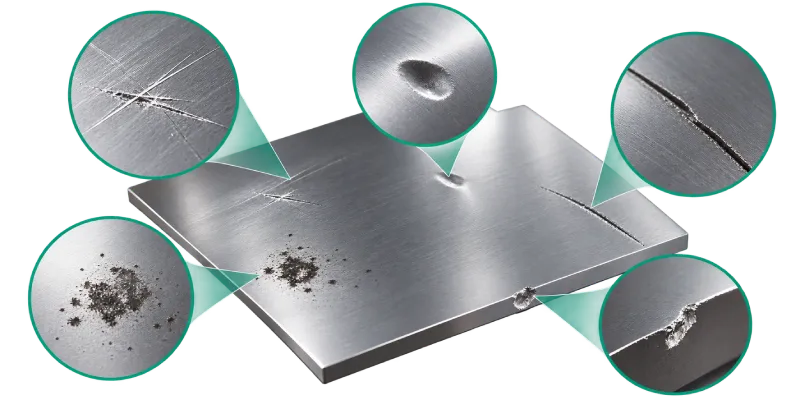
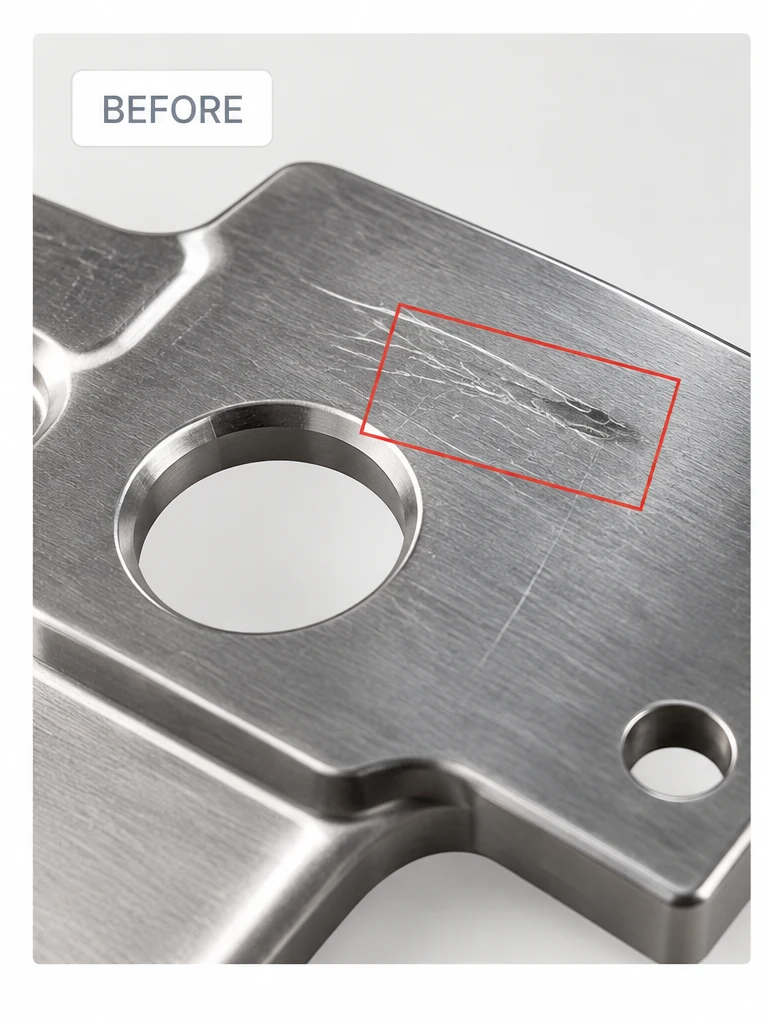
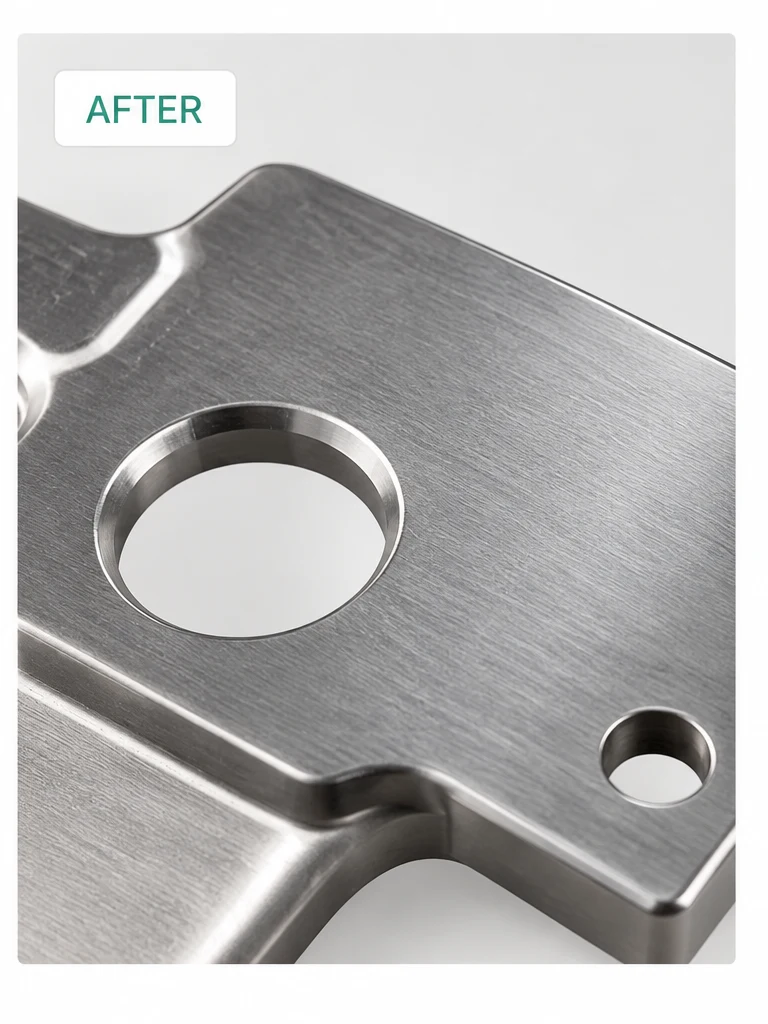
Surface defects rarely show up the same way twice — a scratch catches light differently than a dent, a stain behaves differently than contamination, and a coating defect might only be visible at a specific angle. Manual inspection catches most of it, most of the time, which is exactly the problem at production speed and volume.
We build surface defect detection around the specific defect and material, not a generic camera setup — the lighting geometry usually matters more than the camera resolution, and getting that wrong is the most common reason a defect detection system underperforms.