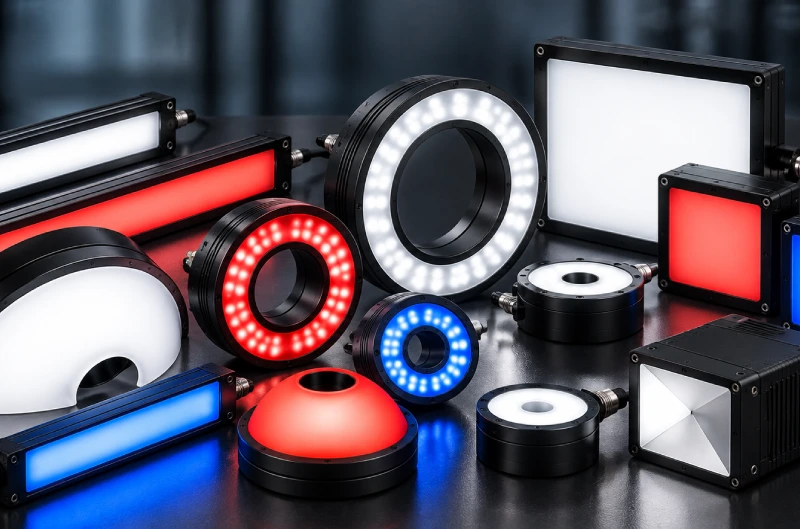
A camera and lens can only work with the contrast that’s put in front of them. The right lighting geometry, angle, wavelength, and control mode is what turns a barely-visible scratch, a flush surface, or a clear label edge into something a vision system can reliably detect, frame after frame.
We treat lighting as its own engineering decision, not an accessory — matched to the part’s material and geometry, the defect you need to catch, and how much ambient light needs to be rejected on the floor.