Case Study · Automation Industries

Dual-Camera Code Reading and Card Presence Inspection in an Automated Handling Process

Two independent cameras verify and read a code at the first inspection point and confirm that exactly one card is present in the bucket at the second — sending OK / NOK status to the control system over Modbus.

Industry

Automation Industries

Application

Vision system for code & card presence inspection

The Application

Verifying identification and material presence at two inspection points

In automated handling systems, reliable identification of components and verification of material presence are essential for process accuracy and smooth downstream operations.
In this application, a dual-camera vision inspection system was developed to perform code verification and card presence inspection at different stages of the automated process — automating code reading, data communication and card quantity checks within the material handling process.

Key Factors

Performance at a Glance

Two cameras, two independent inspection tasks

2

Cameras performing independent inspection tasks within the process.

Front / Back

Card orientation does not matter — both placements are accepted as OK.

1 card = OK

Two cards or no card is detected and flagged NOK.

Operation

How the inspection works

The vision system uses two cameras to perform independent inspection tasks within the automated process, and reports status to the control system through Modbus.

01

Camera 1 — code inspection

At the first inspection point the camera checks for the presence of the specified code, then reads, decodes and sends the data to the control system. Code present = OK; absent or not read = NOK.

02

Camera 2 — card presence

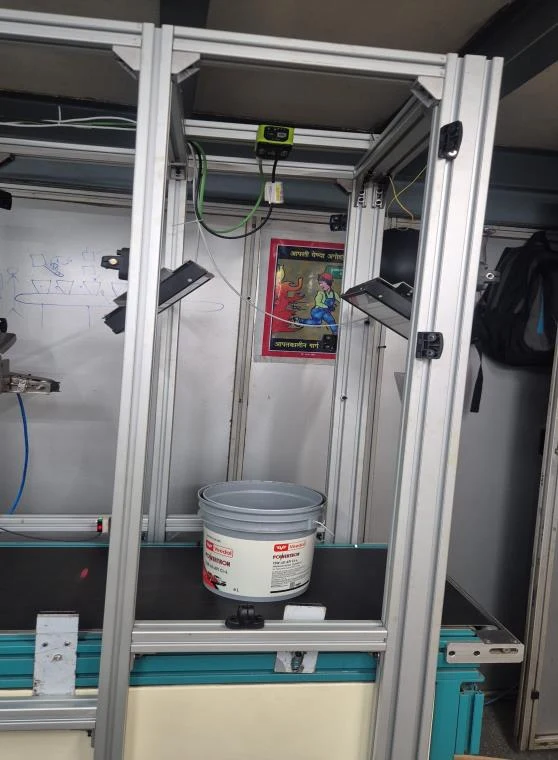
At the second inspection point the camera checks whether the required card is present inside the bucket, regardless of front- or back-side placement.

03

Card quantity check

One card is OK. Two cards (multiple-card condition) or no card (missing-card condition) is NOK.

04

Modbus status & correction

OK / NOK data is sent to the control system via Modbus. On NOK, the bucket is corrected — one card removed if two are present, or one added if none.

Final Result

Card count verified from the camera image

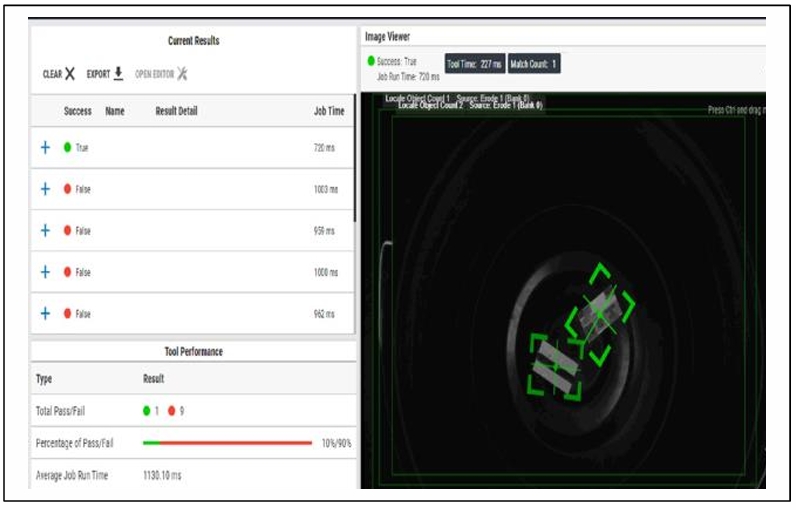
Pass — one card detected (Success: True, Match Count 1)
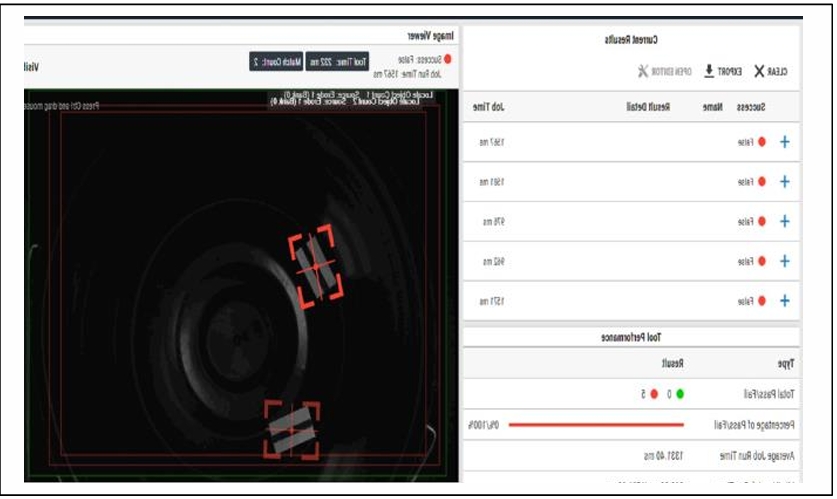
NOK — two cards detected (Success: False, Match Count 2)

Technology Used

Hardware behind the inspection

Zebra Smart Camera

Two cameras handle code inspection and card presence inspection independently.

Modbus Communication

Passes the OK / NOK status and code data to the control system.

Zebra Software

Used to set up the inspection and display results in the image viewer.

Get Started

Have a similar inspection challenge?

Share your part image, defect details, cycle time, accuracy requirements, and existing machine information. Our application team will help evaluate the right machine vision architecture for your production process.

Book an Application Consultation

Share your requirement, our expert will be in touch with you on same day